


Feature Guides
Systems, Concepts, and Archetypes
Learn how systems, concepts, and player archetypes give playbooks reusable football structure beyond individual play diagrams.
Overview / Purpose
Systems, concepts, and archetypes are supporting canon objects. They help the staff preserve the structure behind a playbook instead of relying only on play names or drawings.
Use them when a football idea needs to be reusable across plays, teaching, and later preparation work.
Who this is for
This page is for coaches and analysts who define how the staff talks about scheme, play families, role expectations, and player fit.
It is especially useful when a playbook has grown enough that play names alone no longer explain the system.
What to know first
Each object has a different job:
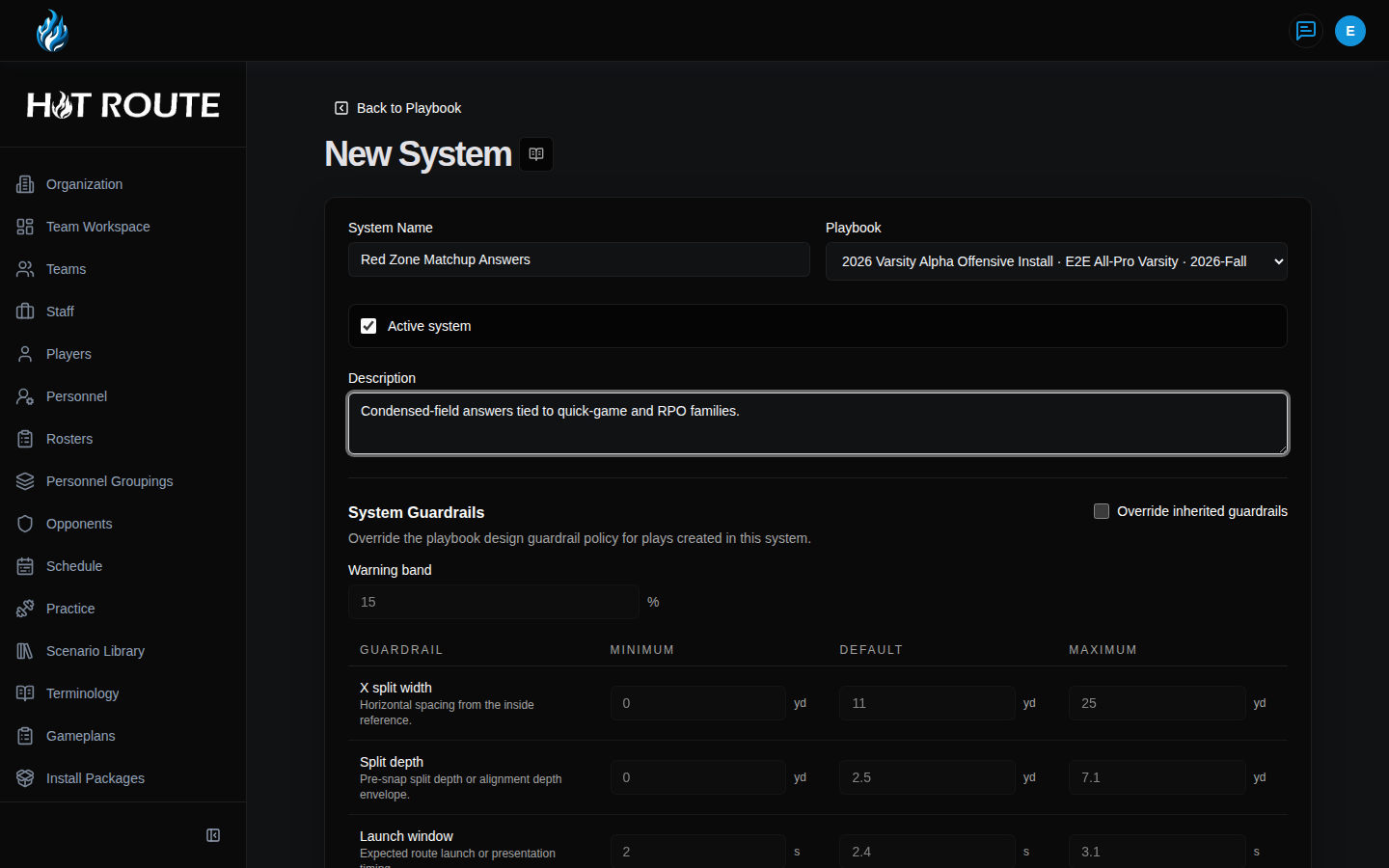
- System - a named scheme or structural grouping inside a playbook.
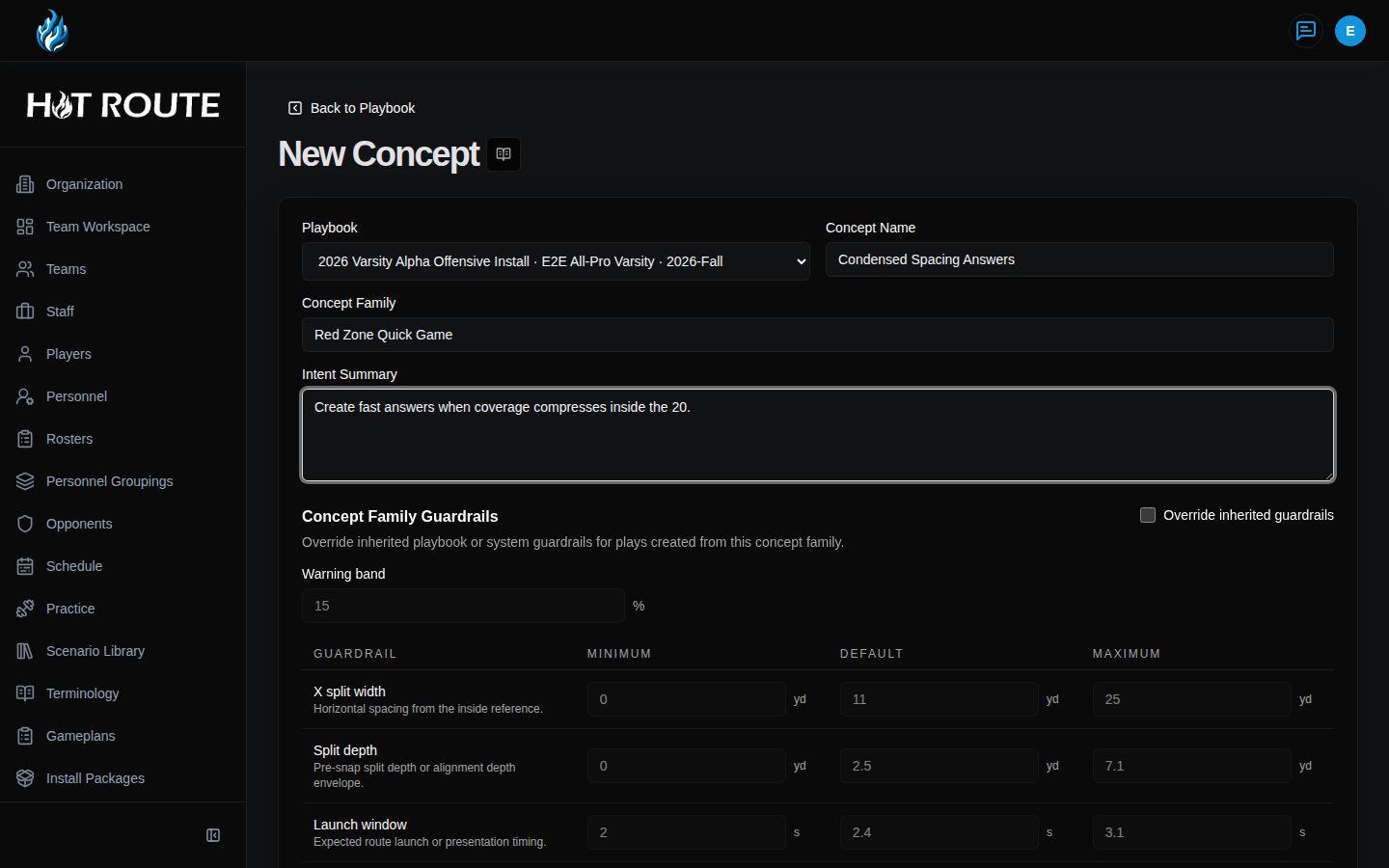
- Concept - a family of football ideas that may show up across multiple plays.
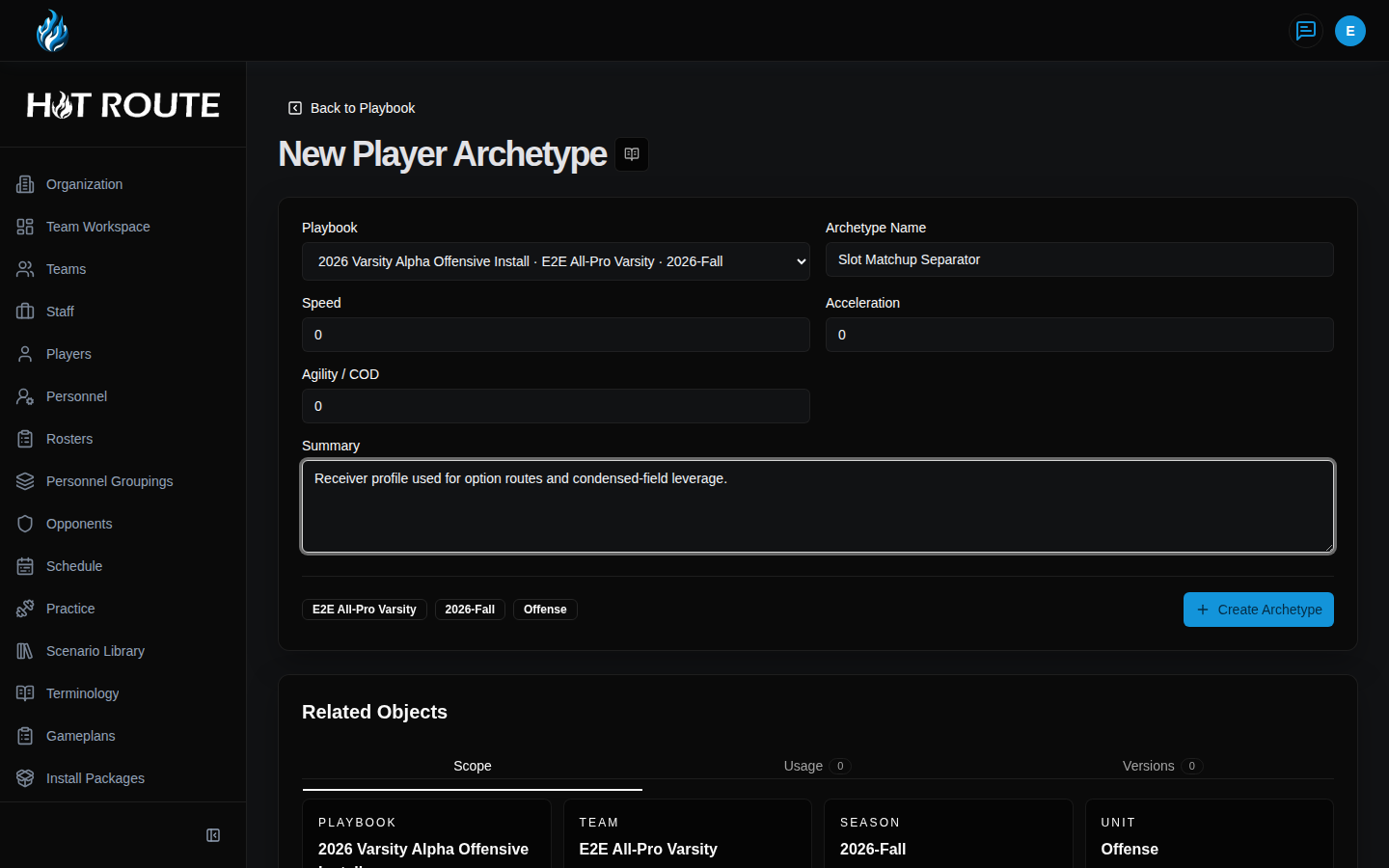
- Archetype - a coach-readable player profile or role pattern used to reason about fit and responsibilities.
These objects help staff explain why a play exists and how it should be understood. They do not automatically make a play authoritative or publish a change.
How it works
This guide covers these routes:
| App route | What it is for |
|---|---|
/systems/new | Create a system in playbook scope. |
/systems/[systemId] | Review or update a system when access allows it. |
/concepts/new | Create a concept or concept-family draft in playbook scope. |
/concepts/[conceptId] | Inspect a concept and its lifecycle state. |
/archetypes/new | Create a player archetype draft linked to a playbook. |
/archetypes/[archetypeId] | Inspect or update an archetype and its status. |
The playbook remains the scope. The supporting object explains a part of that playbook.
Step-by-step instructions
- Start from Playbook Manager or a playbook detail page.
- Confirm the selected playbook is the right team, season, and unit.
- Click the create action for System, Concept, or Archetype.
- Give the object a clear football name.
- Write the description or intent in language another coach would recognize.
- Save the object.
- Open the object detail page.
- Review its status and related playbook context.
- Use the linked playbook or related object actions to move back into the broader playbook work.
What good looks like
Good supporting canon makes the playbook easier to teach and maintain.
Staff should be able to answer:
- What system or scheme family does this work belong to?
- Which concepts are reusable across plays?
- Which player archetypes explain role fit or responsibility expectations?
- Which playbook owns the object?
- Is the object active, draft, published, reviewed, or archived?
Common questions or mistakes
Should every play have a new concept?
No. Concepts are useful when an idea needs reuse or teaching clarity across more than one play or situation.
Are archetypes real player records?
No. An archetype is a football role pattern. It should not be used as a substitute for roster, eligibility, availability, or private player data.
Do systems publish plays automatically?
No. Systems organize the playbook. Play lifecycle and version behavior stay with the play and its review path.
Related docs / next steps
Read Playbook Manager for the hub where these objects usually start.
Read Playbooks for the scope that owns these objects.
Read Plays for how individual plays reference and benefit from supporting canon.